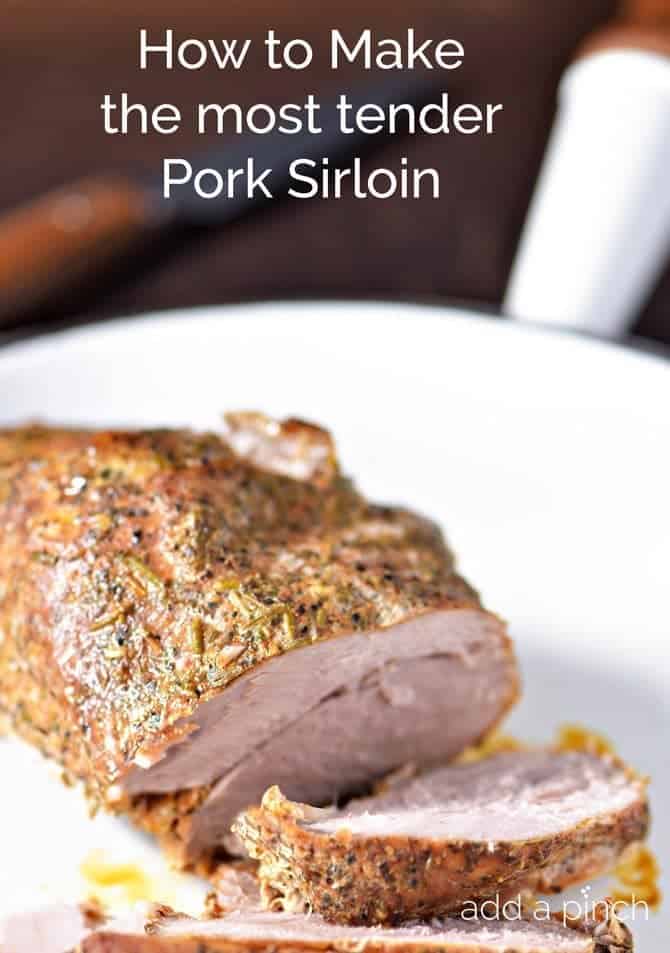
The universal culinary challenge: transforming a potentially delicious cut of meat into a succulent, memorable meal, rather than a dry, forgettable one. Few cuts embody this struggle quite like pork sirloin. Often celebrated for its lean profile and robust flavor, it also harbors a notorious reputation for drying out and turning tough if not handled with precision. If you've ever despaired over a plate of chewy pork, wondering where you went wrong, you're not alone. But what if there was a foolproof method, a true game-changer that guarantees tender, juicy pork sirloin every single time?
You’re about to discover the secrets to unlocking the full potential of this versatile cut. This isn't just another pork sirloin recipe; it's a comprehensive guide, honed over decades of culinary experimentation, designed to equip you with the knowledge and techniques to cook the most tender pork sirloin recipe imaginable. We’ll delve into the science, demystify the cooking process, and arm you with a two-stage method – a simple saltwater brine followed by the revolutionary reverse sear technique – that will banish dry pork from your kitchen forever. Get ready to never dry out your pork sirloin again!
Understanding Your Cut: The Lean Truth About Pork Sirloin
Before we even think about turning on the heat, let's get intimately acquainted with pork sirloin. Often found in the meat aisle under various aliases such as pork loin roast, sirloin chops, or pork hipbone steak, this cut hails from the area just behind the loin and in front of the hind legs of the pig. Understanding its fundamental characteristics is the first crucial step towards mastering its preparation.
The most defining feature of pork sirloin is its remarkable leanness. Unlike fattier cuts like pork shoulder, sirloin has very little intramuscular fat, also known as marbling. On one hand, this makes it a fantastic choice for those seeking a healthier, protein-packed meal. It’s a lean canvas, ready to absorb and showcase flavors. On the other hand, this leanness is precisely what makes it so susceptible to drying out. Fat acts as an internal basting agent, providing moisture and flavor, and creating a buffer against overcooking. With pork sirloin, that natural buffer is minimal, meaning we, as cooks, must actively create that moisture insurance through our preparation methods.
Think of it like tuning a finely calibrated instrument; you need to understand its mechanics to make it sing. Without sufficient fat, the margin for error during cooking shrinks considerably. This isn't a flaw of the meat, but rather a characteristic that demands respect and a specific approach to truly shine.
The Culprit: Why Pork Sirloin Turns Tough (And How to Avoid It)
The primary reason most home cooks struggle with pork sirloin is straightforward: overcooking. Because it's a lean muscle, exposing it to heat for too long or at too high a temperature causes the muscle fibers to contract intensely, squeezing out precious moisture. The result is a dense, chewy texture reminiscent of shoe leather – a far cry from the tender experience we crave. The ideal internal temperature for pork is 145°F (63°C), followed by a brief rest. Beyond this point, moisture loss accelerates dramatically. This makes an accurate meat thermometer your most invaluable tool in the kitchen.
Beyond overcooking, improper preparation also plays a significant role. Throwing a cold piece of pork straight from the fridge into a hot pan is a recipe for disaster. The exterior will cook rapidly, potentially burning, while the interior struggles to catch up, leading to an unevenly cooked piece of meat that can be simultaneously raw in the middle and overcooked on the outside. Allowing your pork to come closer to room temperature before cooking, combined with strategic pre-treatment, ensures a more uniform cook.
Pork Sirloin vs. Pork Tenderloin: A Crucial Distinction
Another common source of confusion lies in differentiating pork sirloin from pork tenderloin. While their names sound similar, they are distinct cuts requiring different cooking strategies. Think of pork tenderloin as the "filet mignon" of pork – it's naturally incredibly tender, has very little fat, and is best cooked quickly and directly, often seared or grilled to a perfect medium-rare. Pork sirloin, on the other hand, is more akin to a beef sirloin steak – flavorful and lean, but it benefits immensely from a more measured and thoughtful approach to achieve peak tenderness.
Attempting to cook pork sirloin with the same fast, high-heat method typically used for tenderloin is a common mistake that almost guarantees a dry outcome. Recognizing this difference is paramount to mastering how to cook the most tender pork sirloin recipe you’ve ever tasted.
The Game-Changer Method: Brine and Reverse Sear for Unbeatable Tenderness
So, what’s the secret to consistently tender, juicy pork sirloin? It’s a powerful, two-stage technique that acts as a comprehensive insurance policy against dryness: first, a simple saltwater brine, followed by the revolutionary reverse sear. This method transforms a challenging cut into a culinary triumph, promising an incredibly even cook from edge to center, with a beautifully browned crust.
Stage 1: The Simple Saltwater Brine
Brining is a truly transformative step for lean meats. It works on the principle of osmosis and denaturation. As the pork soaks in a saltwater solution (typically 1 tablespoon of salt per cup of water, often with optional additions like sugar, herbs, or garlic), the muscle fibers absorb water, but more importantly, the salt helps to denature the proteins. This process causes the muscle fibers to unravel slightly, allowing them to retain more moisture during cooking and making them more tender. It also seasons the meat from within, imparting a depth of flavor that a surface rub alone cannot achieve.
For pork sirloin, a brine of at least 30 minutes, and ideally up to 2-4 hours (depending on thickness), can make a significant difference. Just ensure the pork is completely submerged in the chilled solution.
Stage 2: The Reverse Sear Technique
While brining addresses internal moisture, the reverse sear technique tackles evenness and crust perfection. Traditional searing often leads to a gradient of doneness, with the outer layers more cooked than the center. The reverse sear flips this process: the meat is first cooked gently in a low-temperature oven, then finished with a quick, high-heat sear.
- Low Oven Roast: The pork sirloin is roasted at a low temperature (e.g., 225-275°F / 107-135°C) until its internal temperature is about 10-15 degrees shy of your target (e.g., 130-135°F / 54-57°C for a final 145°F / 63°C medium-rare/medium). This slow, gentle cooking ensures the meat cooks uniformly from edge to edge, gradually raising the internal temperature without squeezing out moisture prematurely. This is where how to cook the most tender pork sirloin recipe truly takes shape.
- Resting: After the oven, the pork rests for 10-15 minutes. This allows the juices to redistribute throughout the meat, preventing them from gushing out when sliced. During this time, carryover cooking will also raise the internal temperature a few more degrees.
- High-Heat Sear: Finally, the pork is quickly seared in a screaming hot skillet (preferably cast iron) with a high smoke point oil, for just 1-2 minutes per side. This rapid sear creates a beautiful, flavorful crust through the Maillard reaction, without overcooking the perfectly tender interior.
This method guarantees edge-to-edge tenderness and an incredible exterior, truly elevating your pork sirloin. For an even deeper dive into this fantastic method, check out our guide: Master Tender Pork Sirloin: Brine & Reverse Sear Guide.
Step-by-Step Recipe: Your Path to Perfect Pork Sirloin
Ready to put theory into practice? Here's a comprehensive guide to cooking the most tender pork sirloin recipe you'll ever make, using the brine and reverse sear technique.
Ingredients:
- 1-2 lbs pork sirloin roast (or sirloin chops)
- 4 cups water (for brine)
- 4 tablespoons kosher salt (for brine)
- Optional brine additions: 1-2 tbsp sugar, a few sprigs of rosemary or thyme, a few smashed garlic cloves, 1 tsp black peppercorns
- 1-2 tbsp high smoke point oil (e.g., canola, grapeseed, avocado)
- For the rub: 1 tsp garlic powder, 1 tsp onion powder, 1/2 tsp smoked paprika, 1/2 tsp black pepper, 1/4 tsp cayenne pepper (optional), 1/2 tsp dried thyme or rosemary. Adjust salt if not brining.
- Optional glaze: Honey-dijon garlic sauce (1/4 cup honey, 2 tbsp Dijon mustard, 1 tbsp minced garlic, 1 tbsp olive oil)
Equipment:
- Large bowl or container for brining
- Paper towels
- Roasting pan with rack or oven-safe skillet
- Instant-read meat thermometer (ESSENTIAL!)
- Cast iron skillet or heavy-bottomed pan for searing
Instructions:
- Prepare the Brine (2-4 hours ahead): In your large bowl, combine water, salt, and any optional brine additions. Stir until salt is fully dissolved. Submerge the pork sirloin completely in the brine. Cover and refrigerate for 2-4 hours. For thinner cuts like sirloin chops, 30-60 minutes may suffice.
- Dry and Season (30 minutes before cooking): Remove the pork from the brine. Rinse it thoroughly under cold water to remove excess salt (this is crucial!). Pat the pork extremely dry with paper towels. A dry surface is vital for a good sear. Let it sit at room temperature for about 30 minutes while you preheat your oven.
- Preheat Oven: Preheat your oven to a low temperature, between 225-275°F (107-135°C).
- Apply Rub: While the pork is coming to temperature, rub the entire surface evenly with your chosen spice blend.
- First Cook - Low and Slow: Place the seasoned pork sirloin on a rack in a roasting pan or directly into an oven-safe skillet. Insert your meat thermometer into the thickest part of the meat, avoiding bone. Roast in the preheated oven until the internal temperature reaches 130-135°F (54-57°C). This can take anywhere from 30-60 minutes, depending on the thickness of your sirloin and your oven's temperature.
- Rest and Prepare for Sear: Remove the pork from the oven. If you plan to use a glaze, brush it on now. Let the pork rest on a cutting board or clean plate for 10-15 minutes. This resting period allows the juices to redistribute and for carryover cooking to gently raise the temperature. While it rests, heat your cast iron skillet over high heat with your high smoke point oil until it's shimmering and just starting to smoke.
- The High-Heat Sear: Carefully place the rested pork sirloin into the screaming hot skillet. Sear for 1-2 minutes per side, rotating to get all surfaces golden brown and crispy. This step creates that irresistible crust.
- Final Rest, Slice, and Serve: Once seared, remove the pork from the skillet and let it rest again for another 5-10 minutes. This final rest ensures maximum juiciness. Slice against the grain into 1/2 to 3/4-inch thick medallions. Serve immediately with your favorite sides, such as roasted Brussels sprouts and butternut squash, for a truly complete and delicious meal.
Conclusion
You now possess the knowledge and the "no-fail" method to conquer pork sirloin. Gone are the days of dry, tough, and disappointing meals. By understanding the lean nature of this cut, embracing the power of a simple saltwater brine, and mastering the reverse sear technique, you can consistently achieve the most tender pork sirloin recipe you’ve ever prepared. Remember the crucial internal temperature of 145°F (63°C), the importance of resting, and the magic an instant-read thermometer can perform. Experiment with different spice rubs and glazes to make this versatile cut your own. With these insights, your culinary journey with pork sirloin will be one of juicy, tender success every single time. Say goodbye to dry pork forever!
